

Bitcoin ETFs & Bank Blockchains: Why Institutions are Betting on Crypto
{VIDEO} Expert shares insights on the crypto institutional sector.

Unraveling the Crypto Institutional Landscape

It’s hard to ignore the optimism in the crypto space right now surrounding potential Bitcoin ETF approvals. This week, Bitcoin’s price surged to $35,198, a 17% increase from the previous week and its highest since May 2022. This enthusiasm was fueled when data for the iShares Spot Bitcoin ETF briefly appeared on the DTCC website. BlackRock is not the only major institution filing a Bitcoin ETF. Other notable Bitcoin spot ETF applications that have been filed with the U.S. Securities and Exchange Commission (SEC) include WisdomTree, Invesco, VanEck, Grayscale, and Bitwise. All eyes are on ETFs.
Beyond Bitcoin price action and speculation, it’s evident that major financial players are not just bullish on Bitcoin but are actively integrating blockchain technology. A recent highlight was the tokenized transaction between BlackRock and Barclays facilitated by JPMorgan’s private blockchain network. This development hints at how blockchain could revolutionize traditional financial markets in the near future.
To dive deeper on these stories and a number of other promising updates from the crypto institutional sector, I talked with Aya Kantorovich, co-founder and co-CEO of Fractal, a firm reshaping the digital assets realm with its onchain platform for transparent clearing and settlement. We covered a variety of topics across, including:
Fractal’s mission to enhance transparency in the digital assets space
Landmark tokenized transaction between BlackRock and Barclays via JPMorgan Chase’s TCN
The impact of ETF filings
The growing crypto interest in Asia
The potential impact of the FTX trial on institutional trust
MakerDAO‘s innovative approach to integrating traditional financial assets onchain
This interview gave me a deeper understanding of the evolving crypto institutional landscape and its implications for the future. I encourage you to watch the full interview below or read the transcript here.
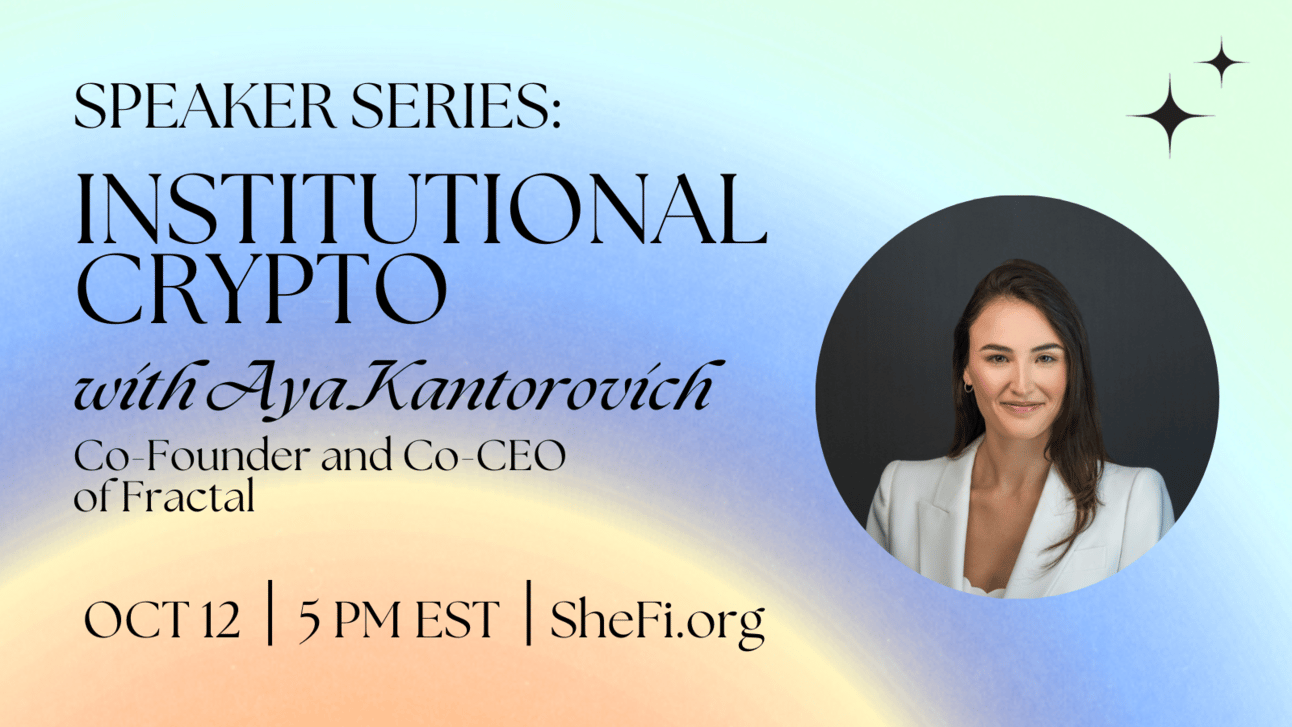
A Glimpse from the Interview with Aya Kantorovich
Maggie: Who are the key players shaping the institutional crypto landscape?
Aya: The landscape is diverse. We have crypto native exchanges like Coinbase and Bitstamp that have been around since the early days. Then there are prime brokers like FalconX that bridge traditional and crypto markets. DeFi institutions such as Compound and Uniswap are making significant contributions to the ecosystem. And now, traditional institutions like WisdomTree and Goldman Sachs are making their presence felt, though they’ve faced challenges, especially after events like the FTX crash.
Maggie: Why are these institutional players so critical for the success and growth of the cryptocurrency market?
Aya: Institutional players bring stability and credibility. They provide essential liquidity, which ensures minimal price slippage and efficient trading. Moreover, they play a pivotal role in bringing real-world assets with yield to the blockchain, underwriting these assets, and managing the associated risks. Their vast capital and expertise are instrumental in enabling the use of various assets within the crypto ecosystem, fostering growth and innovation.
Maggie: The crypto community is buzzing about recent ETF filings. Why are these considered such significant milestones for the cryptocurrency ecosystem?
Aya: Crypto ETF approvals are seen as a barometer for regulatory acceptance. After a period of uncertainty earlier in the year, recent developments, like the ruling in the Ripple case and the arguments in favor of Bitcoin and Ethereum ETFs, have reignited optimism. As more countries establish regulatory frameworks, the push for crypto ETFs intensifies. Their approval would signify that the cryptocurrency market is gaining greater legitimacy, especially in the United States.
Maggie: The BlackRock-Barclays transaction on JP Morgan’s blockchain has garnered attention. Do you see this as a sign of more institutions tokenizing assets on the blockchain?
Aya: Absolutely. The BlackRock-Barclays transaction is just the tip of the iceberg. It showcases the potential of blockchain for faster, more transparent, and cost-effective settlements. Several institutions are keen on this technology. We’ve already seen a landmark collateral transaction with BlackRock tokenizing shares for an OTC derivatives trade. I anticipate more such experiments, signaling a broader adoption of blockchain technology in traditional finance.
Maggie: MakerDAO has been in the news for its efforts to bring assets like treasury bills onto the blockchain. How does this fit into the broader institutional landscape?
Aya: MakerDAO’s initiatives are groundbreaking. While there’s debate about the yield, it’s crucial to understand that not everyone has easy access to traditional assets like U.S. treasuries. By bringing these assets onchain, we’re democratizing access. Moreover, it helps create a more comparable lending market on-chain, aligning interest rates with traditional markets. This balance is essential for a robust and healthy market.
Don’t miss out on the full conversation! Watch the entire interview here.

If you enjoyed this newsletter, please share with your colleagues and networks!
I joined SheFi last year and it completely changed how I think about money and ownership.
Do you think Web3 can really close the gender gap in finance, or will it repeat the same patterns?